The Popkins Effect: How One Coach Rewired the Blue Jays
When the Toronto Blue Jays arrived at Spring Training in Dunedin, Fla., last February, the franchise was searching for answers. The 2024 season ended with a 74-88 record, finishing last in the American League East, and the ninth straight year without a Postseason victory. Ownership had promised change, but despite high-profile signings, including 2024 AL Home Run Champion Anthony Santander, optimism was scarce. By late May 2025, after a 13-0 loss to the Tampa Bay Rays, the team sat at 25-27 and appeared destined for another lost year.
What followed was one of the most remarkable turnarounds in Major League Baseball history. The Blue Jays went from being the league’s punchline to finishing 94-68, clinching the American League pennant and reaching the World Series for the first time in 32 years. The key factor in that reversal was not a blockbuster trade or signing but the influence of new hitting coach David Popkins.

Popkins, hired from the Minnesota Twins after Toronto’s 2024 offensive collapse, inherited a roster that lacked identity at the plate. The previous season, the Blue Jays ranked 19th in batting average (AVG), 26th in home runs (HR), 17th in on-base plus slugging(OPS) and 23rd in hard-hit percentage. Their offence relied heavily on power-hitting that rarely materialized. Popkins’ philosophy was to move away from that model entirely, focusing instead on situational hitting and developing confidence throughout the lineup.
The results were immediate. In 2025, Toronto finished first in AVG, 11th in HR, third in OPS and 11th in hard-hit percentage.
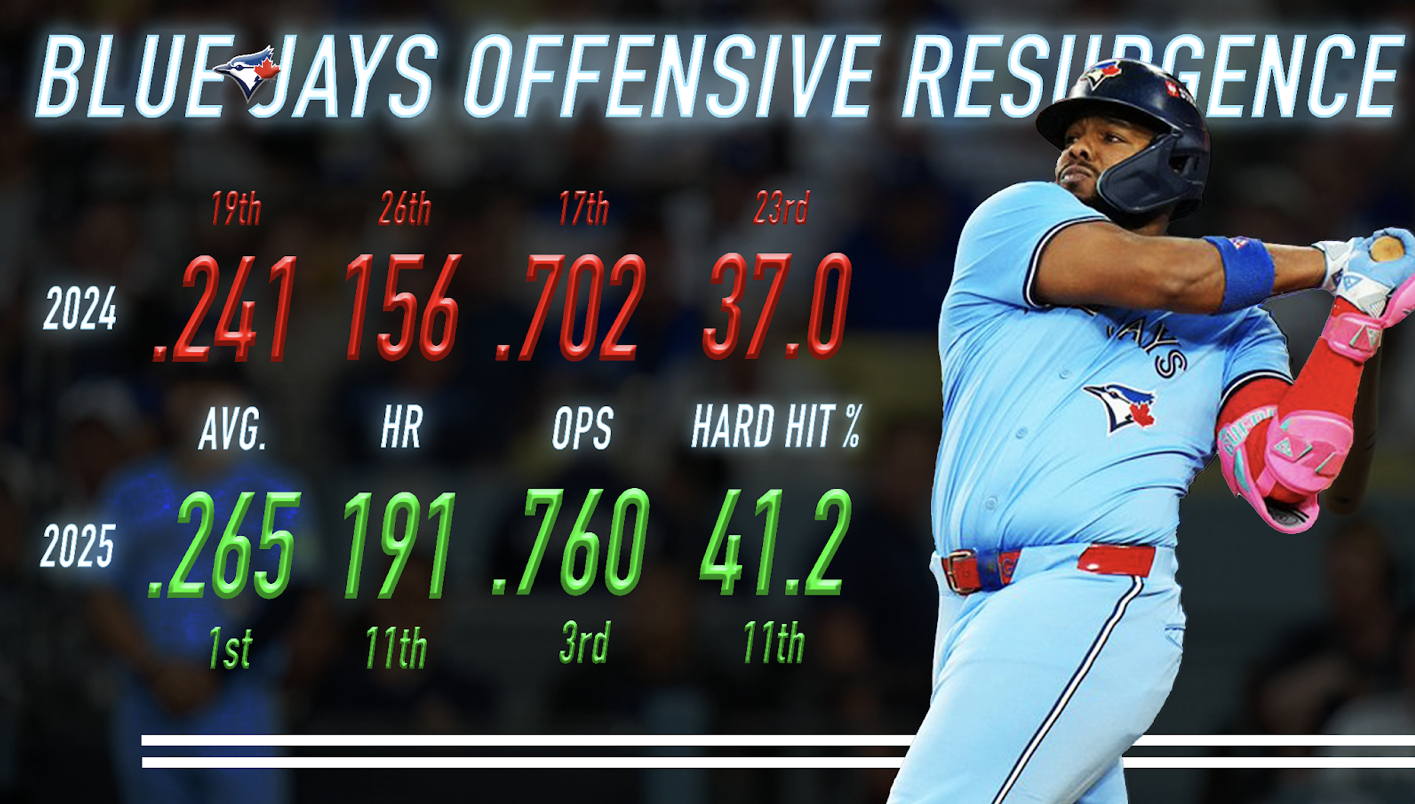
Created by Tristan Morgan - Stats: MLB.com/baseballsevant.com
One of Popkins’ first tactical changes was reimagining the bottom of the batting order. Recognizing that his lineup could not match top teams in power, he introduced a new focus on small-ball tactics. The Blue Jays became one of the top teams in sacrifice hits, consistently moving runners and putting pressure on opposing defences. During Spring Training, even manager John Schneiderembraced the strategy, staging a bunt competition with a $1,000 prize for the winner.
Meanwhile, the top of the order, featuring Vladimir Guerrero Jr., Daulton Varsho, Alejandro Kirk, and a resurgent George Springer, made new strides under Popkins’ guidance. They began swinging with greater intent, attacking pitches with more force and trusting the instincts that brought them to the big leagues. That renewed conviction created a ripple effect, skyrocketing their average bat speed, and energizing the entire lineup, stabilizing an offence that had been adrift.
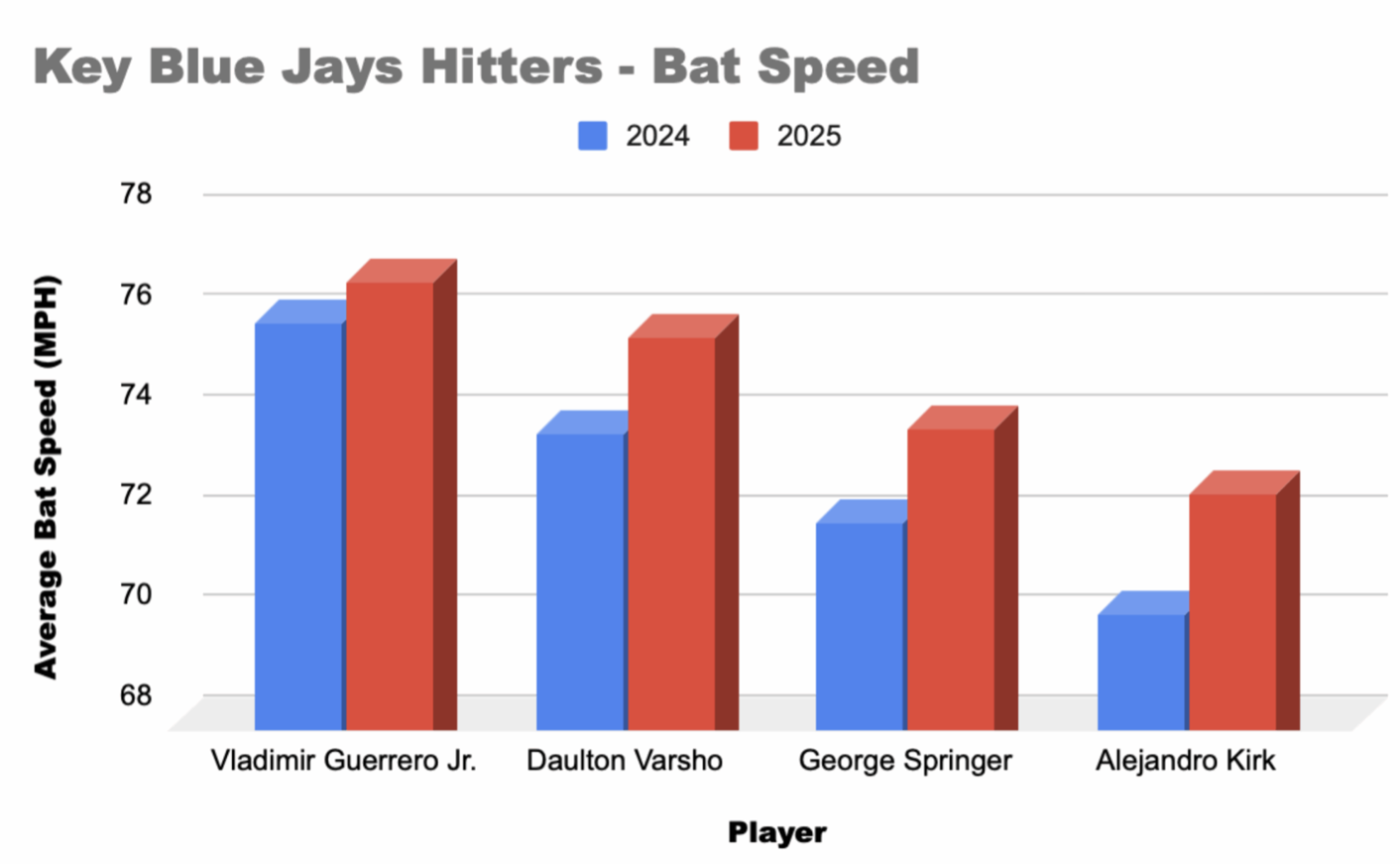
Created by Tristan Morgan - Stats: baseballsevant.com
Popkins has not performed magic, but his steady influence has transformed Toronto’s approach at the plate. The Blue Jays’ resurgence is proof that strategy and culture can reshape a team as much as talent can. Popkins’ approach did not just recalibrate hitters’ swings; it rebuilt belief, turning a once stagnant offence into one of the league’s most efficient and dangerous forces.
